
Author: Julian

  • Highways UK 2026

    Highways UK 2026

    Building Safer, Smarter and More Connected Roads

    Highways UK 2026 takes place on 14 and 15 October at the NEC Birmingham, bringing together thousands of professionals responsible for planning, building, operating, maintaining and future-proofing the UK’s road network.

    The event has become one of the major meeting points for the highways and road infrastructure sector, bringing together National Highways, local authorities, contractors, consultants, technology providers, manufacturers, engineers and policymakers.

    For 2026, the event is built around three central themes: innovation, sustainability and collaboration.

    With more than 10,000 attendees, 360 exhibitors and 250 speakers expected, Highways UK will provide two days of discussion around how the country’s road infrastructure can become safer, smarter, greener and more resilient.

    Roads for a Connected Future

    The theme surrounding Highways UK 2026 is particularly relevant as road infrastructure becomes increasingly connected.

    The roads themselves may look familiar, but the technology being used to manage them is changing significantly.

    Sensors, cameras, connected infrastructure, digital twins, artificial intelligence, real-time data and increasingly sophisticated traffic management systems are creating new possibilities for how road networks are monitored and maintained.

    Instead of relying solely on scheduled inspections and reactive maintenance, highways organisations can increasingly use technology to understand what is happening across the network in real time.

    The long-term objective is not simply to collect more information.

    It is to use that information to make better decisions.

    More Than 10,000 Highways Professionals

    Highways UK is expected to attract more than 10,000 attendees over two days, bringing together professionals from across the highways supply chain.

    The event is designed for organisations involved in every stage of the road network, including:

    • National highways organisations
    • Local authorities
    • Contractors
    • Engineering companies
    • Infrastructure consultants
    • Technology providers
    • Manufacturers
    • Asset management specialists
    • Transport organisations
    • Policymakers
    • Road safety professionals
    • Sustainability specialists

    Bringing these groups together is important because improving the road network cannot be achieved by one organisation alone.

    Highways infrastructure involves complex relationships between government, local authorities, contractors, technology companies, engineers and the wider supply chain.

    Highways UK provides a place for those organisations to exchange ideas and develop new partnerships.

    More Than 360 Exhibitors

    The exhibition floor will feature more than 360 exhibitors from across the highways and infrastructure industry.

    Visitors will be able to explore products, services and technologies covering areas such as:

    • Road construction
    • Highway maintenance
    • Intelligent transport systems
    • Connected infrastructure
    • Digital construction
    • Asset management
    • Road safety
    • Traffic management
    • Materials and surfacing
    • Sustainability
    • Data and analytics
    • Sensors and monitoring
    • Software
    • Communications technology
    • Kerbside management

    The range of exhibitors demonstrates just how broad the modern highways industry has become.

    Building and maintaining roads remains fundamental, but technology is increasingly becoming part of the infrastructure itself.

    Digital Roads

    One of the most interesting areas of Highways UK 2026 is the focus on Digital Roads.

    The dedicated Digital Roads programme explores how technology can help organisations manage infrastructure more intelligently.

    One of the sessions examines how digital technologies can help future-proof the road network by moving technologies such as digital twins and sensor intelligence from isolated trials into wider operational use.

    Digital twins can provide virtual representations of physical infrastructure, allowing organisations to combine information from multiple sources and better understand the condition and performance of assets.

    Sensor technology can add another layer of information by continuously monitoring infrastructure.

    Together, these technologies could support a shift towards more predictive road management.

    From Reactive Maintenance to Predictive Maintenance

    Road maintenance is traditionally associated with identifying a problem and then repairing it.

    Digital technology creates opportunities to intervene earlier.

    If infrastructure can be continuously monitored, organisations may be able to identify signs of deterioration before they become more serious.

    The Highways UK programme includes discussions about moving from reactive maintenance towards preventative asset management.

    This approach can involve predictive data models, targeted interventions and lifecycle planning.

    The principle is straightforward.

    Rather than waiting for infrastructure to fail, organisations can use data to understand where maintenance may be required and intervene earlier.

    For road users, this could ultimately mean fewer unexpected failures and less disruption.

    Artificial Intelligence Comes to Highways

    Artificial intelligence is also becoming increasingly relevant to road infrastructure.

    One of the major keynote discussions on the second day of Highways UK focuses on digital technology, data and AI and how the sector can move innovation from pilot projects into real-world deployment.

    AI has the potential to help organisations analyse the enormous quantities of information generated by modern transport infrastructure.

    That could include data from:

    • Road sensors
    • Traffic monitoring
    • Cameras
    • Connected vehicles
    • Weather systems
    • Asset inspections
    • Maintenance records
    • Incident information

    The challenge is not simply having access to data.

    Organisations need to determine how that information can be turned into useful insight and incorporated into everyday operations.

    Making Roads More Resilient

    Climate resilience is another important part of the 2026 programme.

    Road networks need to continue operating through increasingly challenging environmental conditions.

    Heavy rainfall, flooding, extreme temperatures and severe weather can all affect infrastructure.

    Highways UK includes discussions around how organisations can make roads more resilient while simultaneously reducing the environmental impact of construction and maintenance.

    This requires consideration of both new infrastructure and the enormous amount of road infrastructure already in use.

    For highways organisations, the challenge is therefore not simply building new roads.

    It is ensuring existing assets can continue performing reliably for decades to come.

    Building a More Sustainable Road Network

    Sustainability runs throughout the Highways UK programme.

    Road construction and maintenance require significant quantities of materials and energy.

    Reducing the environmental impact of infrastructure therefore involves examining how roads are designed, constructed, repaired and eventually renewed.

    The event includes discussions around:

    • Lower-carbon road construction
    • Sustainable materials
    • Circular economy principles
    • Recycled road materials
    • Reducing construction emissions
    • Sustainable drainage
    • Climate resilience
    • Environmental performance

    One 2026 case study will examine a road renewal project in Cheshire West and Chester that combined circular, waste-derived and carbon-absorbing materials.

    The project reported substantial reductions in carbon and virgin material use compared with more traditional approaches.

    Examples such as this demonstrate how sustainability is moving from a long-term ambition towards practical changes in the way road infrastructure is delivered.

    Road Safety Remains Fundamental

    Technology and sustainability are important, but the fundamental purpose of road infrastructure remains moving people and goods safely.

    Road safety is therefore a major part of Highways UK 2026.

    The programme includes discussions involving National Highways, Transport Scotland, Transport for London, the Welsh Government and other organisations examining how infrastructure can support safer roads.

    Another important area is roadworker safety.

    Thousands of people work on and alongside live road networks, often in challenging environments.

    Improving safety therefore involves considering both the people using the network and those responsible for maintaining it.

    Connected Communities

    Roads do not exist independently of the communities around them.

    They connect people with employment, education, healthcare, businesses and each other.

    At the same time, road projects and maintenance can create disruption for communities.

    Highways UK includes a dedicated Connected Communities programme examining how transport infrastructure can better support the places through which it passes.

    This includes considering the experience of road users as well as the impact of road infrastructure on local communities.

    As transport planning becomes increasingly data-driven, understanding how infrastructure affects people remains essential.

    Smarter Asset Management

    The UK has an enormous network of existing road infrastructure that must be continually maintained.

    Asset management therefore represents one of the biggest long-term challenges facing the sector.

    Road surfaces, bridges, drainage systems, signs, barriers, lighting and other infrastructure all require inspection and maintenance.

    Digital tools can potentially give asset managers much greater visibility over the condition of this infrastructure.

    Instead of information being stored across disconnected systems, organisations can increasingly bring different data sources together.

    This can help create a clearer picture of asset condition and support decisions about where limited maintenance budgets should be prioritised.

    Connectivity Behind Intelligent Roads

    As highways become more digital, connectivity becomes increasingly important.

    Sensors and connected infrastructure need a method of communicating information.

    Traffic management systems need access to real-time data.

    Cameras and monitoring equipment may need to transmit information back to control centres.

    Connected vehicles increasingly interact with digital infrastructure around them.

    This means telecommunications and data connectivity are becoming part of the wider technology infrastructure supporting modern road networks.

    The road of the future may therefore be defined as much by the information moving around it as by the physical surface vehicles travel across.

    Skills for the Future of Highways

    Introducing new technology also creates a need for new skills.

    Engineers and infrastructure professionals increasingly need to understand digital systems, data, sustainability and connected technology alongside traditional highways disciplines.

    Highways UK 2026 includes a dedicated Professional Development Hub, providing another indication of how important workforce development has become.

    Digital transformation only succeeds when organisations have people capable of implementing and managing the technology.

    Developing the next generation of highways professionals will therefore be just as important as developing the next generation of highways infrastructure.

    250+ Speakers Across the Industry

    More than 250 speakers are expected to participate in the Highways UK 2026 conference programme.

    The published speaker programme includes senior representatives from organisations including National Highways, Transport Scotland, the Office of Rail and Road, the Department for Transport, Transport for West Midlands, CIHT and local authorities.

    The conference covers areas including:

    • Strategic roads
    • Local authorities
    • Digital roads
    • Connected communities
    • Sustainability
    • Materials and surfacing
    • Asset management
    • Road safety
    • Data and AI
    • Professional development

    The breadth of the programme reflects the scale of the challenge involved in maintaining and modernising the country’s road infrastructure.

    Highways UK Excellence Awards

    The Highways UK Excellence Awards also return on the evening of 14 October.

    The awards recognise organisations, teams, projects and individuals working across the highways industry.

    For an industry facing significant technological, environmental and operational change, recognising successful projects also provides an opportunity for organisations to learn from approaches being adopted elsewhere.

    Highways UK 2026: Practical Information

    Highways UK 2026 takes place on Wednesday 14 and Thursday 15 October 2026.

    Venue: Hall 5, NEC Birmingham

    Dates: 14–15 October 2026

    Wednesday: 9:00am–6:00pm

    Thursday: 9:00am–4:00pm

    Exhibition: More than 360 exhibitors

    Expected attendance: More than 10,000

    Speakers: More than 250

    The event is co-located with Asphalt World UK, bringing additional focus to materials, surfacing and the technologies used to build and maintain road infrastructure.

    Building the Roads of the Future

    The future of highways will involve much more than asphalt, concrete and road markings.

    Road networks are becoming increasingly connected, data-driven and intelligent.

    Sensors can provide greater visibility.

    Artificial intelligence can help analyse information.

    Digital twins can create new ways to understand physical infrastructure.

    Connected systems can help organisations respond to changing conditions.

    New materials can reduce environmental impact.

    Predictive maintenance can potentially identify problems before they become serious.

    But delivering those improvements requires collaboration across the entire industry.

    That is ultimately what Highways UK is designed to encourage.

    On 14 and 15 October 2026, the NEC Birmingham will bring together the people, technology and ideas helping create safer, smarter, greener and more connected roads.

  • Fleet & Mobility Live 2026

    Fleet & Mobility Live 2026

    The Future of Fleet Comes to Birmingham

    Fleet & Mobility Live 2026 takes place on 6 and 7 October at the NEC Birmingham, bringing together more than 2,000 fleet professionals for two days dedicated to the future of fleet management and business mobility.

    Described by the organisers as Europe’s largest dedicated event for the fleet and mobility community, the event will feature more than 100 exhibitors and 60 industry speakers, with fleet managers, procurement specialists, finance professionals, HR leaders and senior decision-makers expected to attend.

    From electrification and sustainability to cost control, compliance, driver safety and new fleet technology, Fleet & Mobility Live provides an opportunity to explore many of the challenges and opportunities facing today’s fleet operators.

    Bringing the Fleet and Mobility Industry Together

    Managing a modern vehicle fleet has become increasingly complex.

    Fleet professionals are responsible for much more than choosing vehicles and organising servicing.

    Businesses must consider operating costs, vehicle utilisation, driver safety, compliance, sustainability, electrification, charging, taxation, procurement and rapidly developing technology.

    Fleet & Mobility Live brings many of these conversations together under one roof.

    The 2026 event is designed around three central themes: learn, connect and discover.

    Attendees can hear from industry experts, meet suppliers and connect with other fleet professionals to understand how different organisations are approaching the changing mobility landscape.

    More Than 2,000 Fleet Professionals

    One of the biggest attractions of Fleet & Mobility Live is the opportunity to meet professionals working across different areas of fleet and mobility.

    More than 2,000 fleet professionals are expected to attend the 2026 event, with the organisers stating that 83% of attendees are at manager level or above.

    This creates an opportunity for fleet managers and decision-makers to compare experiences and discuss some of the practical issues they encounter every day.

    Businesses already registered for the event include organisations such as AA, E.ON, ISS, National Grid, Openreach, Schneider Electric and Scottish Water.

    Fleet requirements can vary considerably between organisations, but many of the challenges are shared.

    Controlling costs, reducing risk, maintaining vehicles, supporting drivers and planning the transition towards more sustainable fleets are relevant to businesses across many different sectors.

    More Than 100 Fleet and Mobility Suppliers

    Fleet & Mobility Live 2026 will also feature more than 100 exhibitors, giving visitors an opportunity to explore products and services from across the fleet ecosystem.

    Exhibitor categories include:

    • Car and van manufacturers
    • Contract hire and leasing
    • Fleet management software
    • Telematics and tracking
    • EV charging
    • Driver training
    • Risk management
    • Vehicle security
    • Insurance
    • Fuel cards
    • Vehicle conversions
    • Service, maintenance and repair
    • Breakdown and recovery
    • Logistics
    • Job management software
    • Vehicle hire

    The range demonstrates how many different technologies and services now contribute to operating a modern fleet.

    The Transition to Electric Vehicles

    Electrification remains one of the biggest subjects facing fleet managers.

    For organisations operating large vehicle fleets, transitioning towards electric vehicles requires considerably more planning than simply replacing petrol or diesel vehicles with electric alternatives.

    Fleet managers may need to consider charging infrastructure, vehicle range, driver requirements, journey patterns, charging costs and vehicle availability.

    The suitability of an electric vehicle can also depend heavily on how that individual vehicle is used.

    A vehicle travelling predictable local routes may have very different charging requirements from one regularly covering long distances.

    Fleet & Mobility Live gives operators an opportunity to explore vehicles, charging technology and strategies that could support the transition towards lower-emission fleets.

    Controlling Fleet Costs

    Cost control is another major theme of the event.

    Running a fleet involves numerous direct and indirect expenses.

    Vehicle acquisition, leasing, fuel or electricity, maintenance, tyres, insurance, repairs and vehicle downtime can all contribute to the overall cost of fleet operations.

    The challenge for fleet managers is understanding the complete picture.

    Technology is increasingly helping organisations gain greater visibility into how vehicles are being used and where costs are being generated.

    Telematics, fleet management platforms and connected vehicle data can potentially help businesses understand areas such as mileage, utilisation, driver behaviour and maintenance requirements.

    The organisers specifically identify cost control and fleet operations among the key areas covered by the 2026 event.

    Connected Fleets and Telematics

    Modern fleets are increasingly connected.

    Telematics technology can allow organisations to collect information from vehicles while they are operating, creating greater visibility across a fleet.

    Depending on the system being used, businesses may be able to monitor information relating to vehicle location, mileage, journeys and other operational data.

    For organisations managing hundreds or thousands of vehicles, this information can become an important part of fleet management.

    Connectivity also supports many of the technologies now being introduced into commercial vehicles.

    As vehicles, mobile devices and cloud platforms become increasingly connected, reliable data communication becomes part of the wider infrastructure supporting modern fleet operations.

    Driver Safety and Risk Management

    Vehicles are only one part of fleet management.

    Supporting the people driving them is equally important.

    Driver safety and risk management feature prominently within the fleet industry, particularly for organisations operating large numbers of vehicles across extensive road networks.

    Fleet technology can help organisations identify trends, but technology alone cannot create a safe fleet.

    Policies, driver training, vehicle maintenance and organisational culture all contribute to reducing risk.

    Fleet & Mobility Live includes content designed to provide practical insight into compliance, risk and driver safety, giving fleet professionals an opportunity to learn how other organisations are approaching these challenges.

    Fleet Technology and Digital Transformation

    Digital technology continues to change how fleets are managed.

    A modern fleet operation might use multiple connected platforms covering areas such as:

    • Vehicle tracking
    • Driver management
    • Fuel or charging
    • Maintenance
    • Compliance
    • Job management
    • Vehicle utilisation
    • Insurance
    • Reporting
    • Procurement

    Bringing this information together can provide fleet managers with a much clearer understanding of what is happening across their vehicles.

    The challenge is ensuring technology genuinely improves operations rather than simply generating more information for managers to process.

    Fleet events provide an opportunity to compare different systems and understand how technology is being deployed by other organisations.

    Vans at Work

    Commercial vehicles form another important part of Fleet & Mobility Live.

    The event includes a dedicated Vans at Work area showcasing liveried and racked vans alongside commercial vehicle-focused suppliers and content.

    For businesses operating vans, the vehicle itself often needs to function as a mobile workplace.

    Storage, equipment, payload, vehicle conversion and operational requirements can all influence the type of vehicle a business needs.

    Electrification adds another consideration, particularly where payload, daily mileage and charging requirements must be balanced.

    Three Learning Theatres

    Education forms a major part of Fleet & Mobility Live 2026.

    The event will feature three dedicated learning areas:

    Insights Theatre 1

    Insights Theatre 2

    HR & Procurement Theatre

    The programme includes discussions and panels examining issues affecting fleet decision-makers, with speakers sharing experiences and approaches from across the industry.

    More than 60 industry speakers are expected to take part during the two-day event.

    Networking Across the Fleet Industry

    One of the most valuable aspects of an industry event is the opportunity to speak directly with other people facing similar challenges.

    Fleet & Mobility Live brings together professionals working across transport, HR, finance, procurement, travel and mobility.

    Those different perspectives are increasingly important.

    Fleet decisions can affect company finances, sustainability targets, employees, procurement strategies and wider business operations.

    Bringing people from these different areas together creates opportunities to exchange ideas and understand how other organisations are approaching fleet strategy.

    The Future of Fleet Management

    The fleet industry is undergoing significant change.

    Electric vehicles are becoming increasingly important.

    Vehicles are generating more data.

    Telematics platforms are providing greater visibility.

    Charging infrastructure is becoming part of fleet planning.

    Driver safety technology continues to develop.

    Businesses are facing greater pressure to understand and control operating costs.

    At the same time, fleet managers must ensure that vehicles continue to perform their fundamental purpose: supporting the organisation effectively.

    The future of fleet management is therefore likely to involve finding the right balance between vehicles, people, technology, cost and sustainability.

    Fleet & Mobility Live 2026: Practical Information

    Fleet & Mobility Live 2026 takes place on Tuesday 6 and Wednesday 7 October 2026 at the NEC Birmingham.

    Dates: 6–7 October 2026

    Venue: NEC Birmingham, Hall 6

    Address: North Avenue, Marston Green, Birmingham, B40 1NT

    Tuesday 6 October: 9:30am–4:30pm

    Wednesday 7 October: 9:30am–4:00pm

    Tickets: Free to attend

    The NEC is located next to Birmingham International railway station and is approximately eight miles east of Birmingham city centre.

    Bringing the Future of Fleet Together

    Fleet & Mobility Live 2026 arrives at a time when organisations are having to make important decisions about the future of their vehicles and mobility strategies.

    Electrification, sustainability, connected technology, telematics, compliance, cost control and driver safety are all influencing how fleets are managed.

    For fleet professionals, understanding these developments is becoming increasingly important.

    On 6 and 7 October 2026, Fleet & Mobility Live will bring more than 2,000 fleet professionals together at the NEC Birmingham to learn, connect and discover what comes next for the industry.

  • GRID: Connected Energy Infrastructure 2026

    GRID: Connected Energy Infrastructure 2026

    How IoT Is Supporting the Future of Energy

    Connecting the Energy Infrastructure Community at Excel London

    GRID: Connected Energy Infrastructure 2026 takes place on 1 and 2 October 2026 at Excel London, bringing together leaders, innovators and stakeholders involved in the transformation of the UK’s energy transmission network.

    The event runs from 08:30 to 17:30 on Thursday 1 October and 08:30 to 16:00 on Friday 2 October. Excel London describes the event as a landmark project focused on the people, projects and policies shaping the future of the UK’s energy infrastructure. Excel London

    As the UK goes through a major infrastructure upgrade, connected technology and IoT are becoming increasingly important across energy generation, transmission, storage and remote monitoring.

    The Energy Sector Is Becoming More Connected

    Modern energy infrastructure increasingly relies on connected devices to monitor performance, identify faults and provide operational data from remote assets.

    IoT applications can include:

    • Smart meters
    • Grid monitoring equipment
    • Battery Energy Storage Systems
    • Substation monitoring
    • Environmental sensors
    • Remote power equipment
    • EV charging infrastructure
    • Industrial routers and gateways
    • Asset tracking
    • Predictive maintenance systems

    These technologies help operators collect information from equipment distributed across large geographical areas.

    Reliable connectivity is therefore essential for getting that information back to authorised monitoring and management platforms.

    Remote Monitoring Across Energy Infrastructure

    Energy assets are often installed in locations that are difficult or expensive to visit regularly.

    Connected sensors can help teams remotely monitor conditions such as:

    • Voltage
    • Current
    • Temperature
    • Equipment status
    • Battery condition
    • Environmental conditions
    • Power availability
    • Fault alerts
    • Energy consumption

    Rather than relying only on scheduled site inspections, operators can receive regular data from equipment and respond when readings indicate a potential problem.

    This can help improve visibility across distributed infrastructure.

    Battery Energy Storage Systems

    Battery Energy Storage Systems are becoming an important part of modern energy infrastructure.

    Connected monitoring can help operators track factors such as:

    • Battery status
    • Temperature
    • Charge and discharge activity
    • Power availability
    • Equipment performance
    • Fault conditions

    IoT connectivity can allow this information to be transmitted to remote management platforms without requiring staff to be physically present at every site.

    Reliable communication is especially important where energy storage systems are installed across multiple remote locations.

    Predictive Maintenance

    Traditional maintenance often depends on fixed service schedules or responding after equipment fails.

    Connected sensors create opportunities for a more data-driven approach.

    By monitoring equipment condition over time, organisations may be able to identify changes that indicate maintenance is required.

    Potential monitoring data can include:

    • Temperature changes
    • Vibration
    • Power consumption
    • Pressure
    • Equipment runtime
    • System errors
    • Battery health

    This can help technical teams prioritise maintenance and reduce unnecessary site visits.

    Predictive maintenance does not remove the need for physical inspection, but it can provide additional information to support maintenance planning.

    Smart Grid Monitoring

    Energy networks increasingly require greater visibility over how power is generated, distributed and consumed.

    Connected monitoring equipment can provide real-time or scheduled information from different points across the network.

    This can support:

    • Grid performance monitoring
    • Remote fault detection
    • Energy consumption analysis
    • Power quality monitoring
    • Equipment health checks
    • Capacity planning
    • Infrastructure management

    IoT technology allows distributed equipment to communicate with central systems, giving operators a clearer view of what is happening across the network.

    Multi-Network Connectivity

    Energy infrastructure can be located across cities, rural areas and remote sites.

    Mobile coverage varies significantly between these environments.

    Multi-network IoT connectivity can reduce reliance on a single mobile operator by allowing compatible devices to access multiple available networks.

    This can be particularly useful for:

    • Remote substations
    • Battery storage sites
    • Solar farms
    • Wind infrastructure
    • EV charging
    • Environmental monitoring
    • Temporary energy projects
    • Grid monitoring equipment

    For remote infrastructure, maintaining a reliable connection can be important for sending alerts and operational information.

    EV Charging Infrastructure

    EV charging is another increasingly connected part of the energy ecosystem.

    Charging points may require connectivity to support:

    • Payment processing
    • Charger availability
    • Usage monitoring
    • Remote diagnostics
    • Software updates
    • Fault notifications
    • Energy consumption reporting

    A mobile IoT connection can allow charging equipment to operate without relying entirely on local Wi-Fi or fixed broadband.

    This can also simplify installations across car parks, workplaces, retail locations and remote charging sites.

    Environmental Monitoring

    Energy projects often need to monitor environmental conditions around infrastructure.

    Connected sensors can collect information such as:

    • Temperature
    • Humidity
    • Air quality
    • Water levels
    • Weather conditions
    • Soil conditions
    • Equipment enclosure conditions

    Alerts can be triggered when measurements move outside defined limits.

    This can help organisations monitor both operational equipment and the environment surrounding energy infrastructure.

    Secure Connectivity for Critical Infrastructure

    Energy systems form part of important national infrastructure, so connected devices need appropriate security controls.

    Depending on the deployment, secure IoT connectivity can include:

    • Private APNs
    • VPN connectivity
    • Fixed private IP addresses
    • Restricted internet access
    • IP whitelisting
    • Approved endpoint access
    • Usage limits
    • Connectivity monitoring

    These controls can help determine which systems remote equipment is permitted to communicate with.

    Security should form part of a wider approach covering the device, network, cloud platform, user access and organisational procedures.

    Centralised Connectivity Management

    Large energy projects may involve hundreds or thousands of connected devices across multiple locations.

    Centralised connectivity management can help organisations monitor these connections from one place.

    Depending on the platform, teams may be able to:

    • Monitor data usage
    • Activate and suspend SIMs
    • Set usage alerts
    • Review connection activity
    • Organise devices by location
    • Identify unusual usage
    • Investigate inactive equipment
    • Manage shared data allowances

    This can provide greater visibility as connected infrastructure grows.

    Temporary Connectivity for Energy Projects

    Energy infrastructure projects may also require temporary connectivity during construction, commissioning or maintenance.

    A 4G or 5G router can provide connectivity for:

    • Site offices
    • Monitoring equipment
    • Laptops and tablets
    • Security systems
    • Temporary sensors
    • Cloud applications

    This can allow project teams to get equipment online without waiting for a fixed broadband installation.

    Once the project changes location, the equipment can be moved and redeployed.

    GRID 2026 and the Future of Connected Energy

    GRID: Connected Energy Infrastructure brings together organisations involved in one of the most significant periods of change for UK energy infrastructure.

    Excel London describes the event as being aimed at the public sector, contractors, suppliers, investors and innovators working across the evolving energy landscape.

    As energy infrastructure becomes more distributed and digital, IoT technology will continue to play an important role in monitoring assets, identifying faults and connecting equipment across remote locations.

    From battery storage and substations to EV charging and environmental monitoring, reliable connectivity helps turn individual devices into part of a wider connected energy system.

    GRID: Connected Energy Infrastructure 2026 takes place on 1 and 2 October at Excel London.

    Connect the infrastructure. Monitor the assets. Build a smarter energy network.

  • International Cyber Expo 2026

    International Cyber Expo 2026

    Exploring IoT Security at Olympia London

    International Cyber Expo 2026 takes place on 29 and 30 September 2026 at Olympia London, bringing together cybersecurity professionals, technology providers, government representatives and security leaders to explore the latest developments in digital security.

    The event runs from 09:30 to 17:30 on Tuesday 29 September and 09:30 to 16:00 on Wednesday 30 September in Olympia London’s Grand Hall. It is also co-located with International Security Expo, with registration providing access to both events.

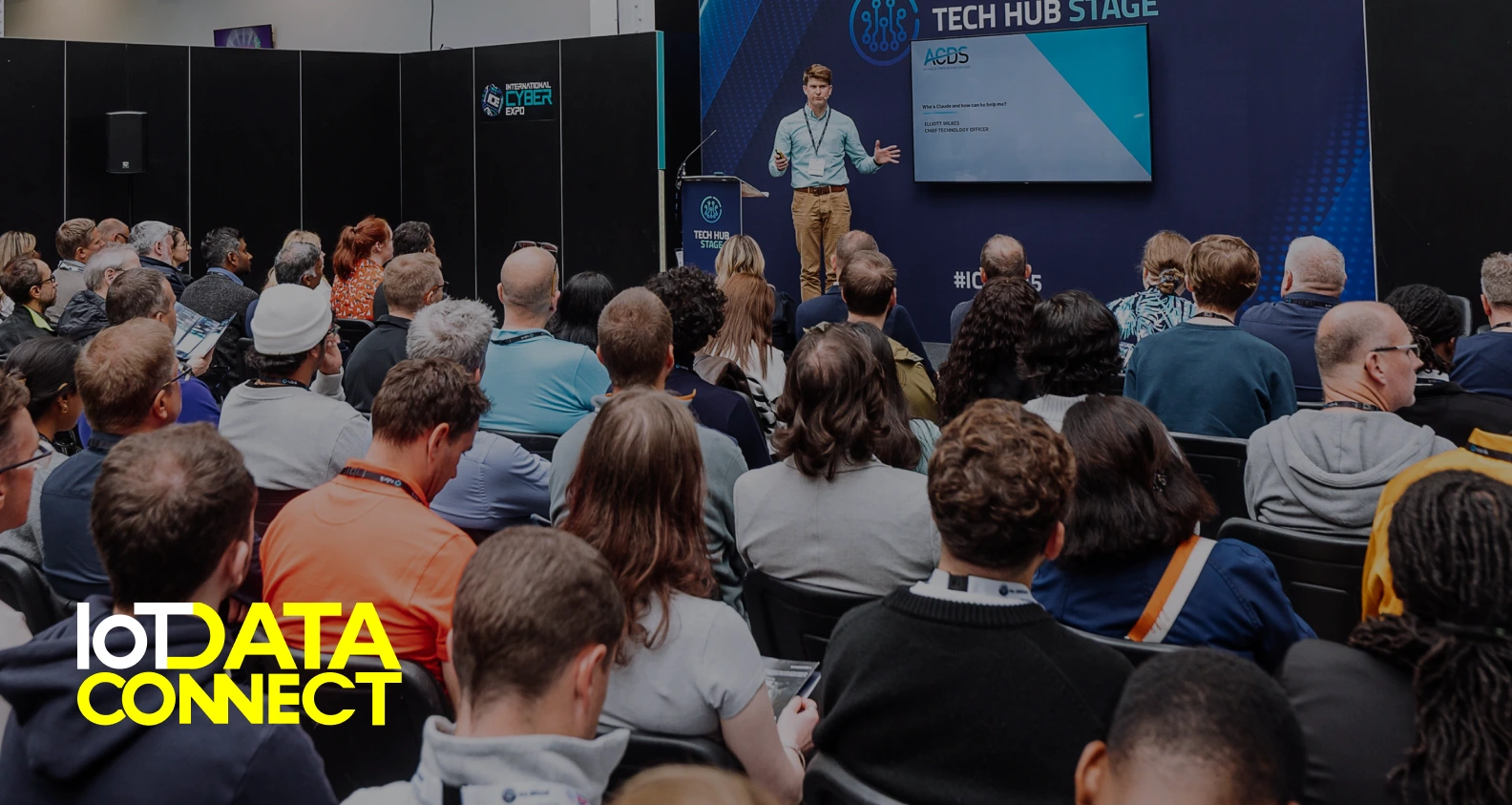
    International Cyber Expo will feature more than 100 exhibitors, over 100 speakers and visitors from more than 90 countries, alongside the Global Cyber Summit, Tech Hub Stage and live demonstrations.

    As organisations connect more equipment to mobile and cloud networks, cybersecurity is becoming an increasingly important part of IoT deployment.

    The Growing IoT Security Challenge

    IoT technology is now used across industries including transport, security, energy, logistics, healthcare, retail and manufacturing.

    Connected equipment can include:

    • CCTV and surveillance cameras
    • GPS trackers
    • Environmental sensors
    • Smart meters
    • Industrial machinery
    • Routers and gateways
    • Digital signage
    • Smart kiosks
    • EV charging equipment
    • Vehicle telematics
    • Remote monitoring systems

    Each connected device needs a way to exchange information with authorised platforms.

    However, every new connection also increases the number of devices, SIMs and network endpoints that organisations need to monitor and manage.

    International Cyber Expo specifically includes OT, IoT and Industrial Security among its exhibitor technology categories, demonstrating the increasing connection between IoT infrastructure and wider cybersecurity strategies.

    Secure IoT Connectivity

    Security should be considered from the beginning of an IoT deployment rather than added after devices have already been installed.

    Depending on the application, secure IoT connectivity can include:

    • Private APNs
    • VPN connectivity
    • Fixed private IP addresses
    • IP whitelisting
    • Restricted internet access
    • Approved endpoint access
    • Data usage limits
    • Automated alerts
    • Centralised SIM management

    These controls can help organisations determine how devices communicate and which systems they are allowed to reach.

    A sensor, tracker or camera may only need to communicate with one specific cloud platform. Giving that device unrestricted access to the wider internet may therefore be unnecessary.

    Private APNs

    A private APN can provide a dedicated mobile data environment for connected IoT devices.

    Rather than allowing devices to communicate openly across the public internet, traffic can be managed through a controlled network configuration.

    Private APNs can be useful for applications involving:

    • CCTV
    • Industrial equipment
    • Energy infrastructure
    • Remote monitoring
    • Payment terminals
    • Security systems
    • Connected healthcare equipment

    They can also be combined with VPN technology where organisations need a protected communication path between remote equipment and central infrastructure.

    Remote Access and Fixed IP Connectivity

    IoT deployments often include equipment installed far away from the technical team responsible for managing it.

    Engineers may need remote access to:

    • Industrial routers
    • CCTV systems
    • Monitoring equipment
    • Gateways
    • Controllers
    • Digital signage
    • Other connected devices

    Fixed IP connectivity can make it easier for authorised systems to identify and communicate with remote equipment.

    Combined with appropriate firewalls, VPNs and access controls, remote management can help organisations diagnose faults and maintain equipment without requiring an engineer to visit every location.

    Monitoring Unusual Activity

    Security is also about visibility.

    A device that normally transmits a few megabytes of data but suddenly begins consuming significantly more could indicate a configuration problem, faulty equipment or activity that requires investigation.

    Centralised IoT management can allow organisations to:

    • Monitor individual SIM usage
    • Create data thresholds
    • Receive alerts
    • Suspend connections
    • Review connection activity
    • Identify unexpected usage
    • Organise devices by location
    • Investigate inactive connections

    Monitoring connectivity alongside traditional cybersecurity tools can provide another layer of operational visibility.

    Multi-Network Connectivity and Resilience

    Cybersecurity and resilience need to work together.

    IoT devices may operate across warehouses, construction sites, vehicles, energy infrastructure and remote locations where mobile coverage varies.

    Multi-network SIM technology can allow compatible equipment to access more than one mobile network, reducing dependence on a single operator.

    This can be particularly useful for:

    • Remote monitoring
    • GPS tracking
    • Mobile assets
    • CCTV
    • Energy infrastructure
    • Construction
    • Logistics
    • Temporary installations

    Reliable connectivity helps ensure security alerts, sensor readings and operational information can continue reaching authorised systems.

    CCTV and Security Systems

    Connected security cameras are a clear example of why both security and reliable connectivity matter.

    CCTV systems may need to transmit images, alerts or video to a central monitoring platform while also allowing authorised engineers to access equipment remotely.

    A dedicated IoT connection can also separate the camera system from a customer’s general Wi-Fi or corporate network.

    Combined with private networking and access controls, this can provide organisations with greater control over how security equipment communicates.

    Industrial IoT

    Industrial environments increasingly rely on connected sensors, controllers and monitoring equipment.

    These systems may monitor:

    • Machinery performance
    • Temperature
    • Pressure
    • Energy consumption
    • Equipment condition
    • Environmental conditions
    • Production processes

    Many of these devices are installed for long periods and may operate with minimal physical supervision.

    Secure remote connectivity can help technical teams monitor equipment while limiting communication to the systems required for the application.

    GPS and Asset Tracking

    Connected tracking devices can transmit location, movement and operational information from vehicles and valuable assets.

    Because this information can reveal routes, locations and working patterns, the connectivity supporting tracking equipment should be carefully controlled.

    Usage alerts, private networking and restricted endpoints can help organisations manage how tracking devices communicate with their platforms.

    Protecting Connected Infrastructure

    As IoT deployments grow, organisations may need to manage hundreds or thousands of devices across multiple locations.

    Security therefore needs to cover more than the individual device.

    Organisations should consider:

    • Device security
    • SIM and connectivity management
    • Network access
    • Remote access controls
    • Cloud platform security
    • Data encryption
    • Software updates
    • User permissions
    • Monitoring and alerts

    No single technology provides complete protection.

    Instead, IoT security should be approached as a combination of device, network, platform and organisational controls.

    International Cyber Expo 2026

    International Cyber Expo is focused on areas including threat intelligence, data protection, cloud security and cyber resilience, supported by expert panels, workshops and live demonstrations.

    For organisations deploying connected devices, this wider discussion is increasingly relevant.

    IoT connectivity is not simply about getting a device online. Businesses also need visibility over where devices connect, what they communicate with and how those connections are managed.

    International Cyber Expo 2026 takes place on 29 and 30 September at Olympia London.

    Secure the device. Control the connection. Monitor the entire IoT estate.

  • International Security Expo 2026

    International Security Expo 2026

    Exploring the Future of Security at Olympia London

    International Security Expo 2026 takes place on 29 and 30 September 2026 at Olympia London, bringing together security professionals, technology providers, government representatives and organisations responsible for protecting people, businesses and critical infrastructure.

    The event runs from 09:30 to 17:30 on Tuesday 29 September and 09:30 to 16:00 on Wednesday 30 September in Olympia’s Grand Hall. It is co-located with International Cyber Expo, giving registered visitors access to both events.

    International Security Expo brings together more than 10,000 security and resilience professionals, with hundreds of suppliers demonstrating technologies across physical security, counter-terrorism, cybersecurity and infrastructure protection.

    As physical security becomes increasingly connected, IoT technology is playing a growing role in how organisations monitor locations, protect assets and respond to incidents.

    Security Technology Is Becoming More Connected

    Modern security systems increasingly depend on connected devices that can communicate with central platforms and authorised teams.

    These can include:

    • CCTV cameras
    • ANPR systems
    • Access-control equipment
    • GPS trackers
    • Environmental sensors
    • Smart alarms
    • Perimeter monitoring
    • Lone-worker devices
    • Industrial routers
    • Remote monitoring systems
    • Temporary surveillance equipment

    IoT connectivity allows these devices to transmit information without relying entirely on traditional fixed infrastructure.

    For organisations responsible for multiple sites, mobile or remote assets, this can provide greater flexibility and visibility.

    Connected CCTV and Surveillance

    CCTV remains one of the most widely used technologies across security operations.

    Connected cameras can transmit images, video and alerts to monitoring centres or cloud platforms, allowing authorised teams to review activity remotely.

    IoT connectivity can be particularly useful where cameras are installed at:

    • Construction sites
    • Car parks
    • Remote infrastructure
    • Temporary events
    • Warehouses
    • Industrial sites
    • Transport locations
    • Vacant properties

    A cellular connection can allow a camera or recording system to operate independently from the host site’s broadband network.

    This can also make it easier to relocate temporary surveillance equipment when requirements change.

    ANPR and Vehicle Monitoring

    Automatic Number Plate Recognition systems are increasingly used for security, access control and vehicle monitoring.

    ANPR cameras can identify vehicle registration numbers and transmit information to a central platform.

    Connected ANPR systems can support:

    • Site access control
    • Staff vehicle management
    • Logistics entrances
    • Car park monitoring
    • Construction sites
    • Private estates
    • Security investigations

    Reliable connectivity allows registration information, images and alerts to reach authorised systems without requiring a fixed broadband connection at every camera location.

    Protecting Remote and Temporary Locations

    Security equipment is not always installed at a permanent building.

    Temporary sites, infrastructure projects and outdoor locations may need surveillance and monitoring before fixed communications are available.

    A suitable 4G or 5G router can provide connectivity for equipment including:

    • CCTV cameras
    • Alarm systems
    • Access-control technology
    • Sensors
    • Laptops and tablets
    • Temporary security offices

    This can help organisations deploy security systems quickly without waiting for a new fixed line.

    When a project ends, the equipment and connectivity can be moved to another location.

    GPS and Asset Tracking

    Security is also about knowing where valuable assets are located.

    Connected GPS trackers can be fitted to vehicles, equipment and other mobile assets.

    Depending on the tracking system, businesses may be able to monitor:

    • Current location
    • Movement
    • Route history
    • Geofence activity
    • Unexpected movement
    • Device tampering
    • Battery status

    Alerts can be generated when an asset moves outside an authorised area or begins moving unexpectedly.

    IoT connectivity allows the tracking device to send this information to a central monitoring platform.

    Multi-Network Connectivity

    Security equipment may operate across locations where mobile coverage differs significantly.

    A camera in one location may have strong coverage from one network, while another operator performs better elsewhere.

    Multi-network IoT connectivity can reduce dependence on one mobile operator by giving compatible devices access to multiple available networks.

    This can be useful for:

    • Temporary CCTV
    • Mobile security teams
    • Remote sensors
    • GPS trackers
    • Construction security
    • Critical infrastructure
    • Nationwide security estates

    For equipment responsible for transmitting alerts or security information, maintaining a reliable connection can be particularly important.

    Environmental Monitoring and Security

    Connected sensors can extend security beyond cameras and alarms.

    Sensors can monitor conditions including:

    • Temperature
    • Smoke
    • Water levels
    • Door activity
    • Power availability
    • Equipment status
    • Movement
    • Air quality

    If predefined conditions are reached, an alert can be sent to the relevant team.

    This can help organisations monitor unmanned buildings, equipment rooms, warehouses and infrastructure without requiring somebody to remain on site permanently.

    Secure Remote Connectivity

    Security equipment itself also needs to be protected.

    Remote devices may transmit video, location information and operational data that should only be available to authorised users.

    Secure IoT connectivity options can include:

    • Private APNs
    • VPN connectivity
    • Fixed private IP addresses
    • IP whitelisting
    • Restricted internet access
    • Approved endpoint access
    • Usage monitoring and alerts

    These controls can help determine which systems a connected device is permitted to communicate with.

    A security camera, for example, may only need access to its authorised monitoring platform rather than unrestricted internet access.

    Remote Monitoring and Management

    Security systems may involve hundreds or thousands of devices across multiple locations.

    Centralised connectivity management can help teams monitor their connected estate without physically visiting every device.

    Depending on the platform, operators may be able to:

    • Monitor data usage
    • Check connection activity
    • Set usage limits
    • Create alerts
    • Suspend connections
    • Identify unusual behaviour
    • Organise devices by site
    • Investigate inactive equipment

    This can help technical teams identify potential problems before dispatching an engineer.

    IoT and Critical Infrastructure

    International Security Expo has a strong focus on the protection and resilience of businesses, people and critical national infrastructure. Its conference programme covers areas including counter-terrorism, security technology, risk and resilience.

    Connected technology is increasingly relevant within these environments.

    IoT devices can support:

    • Remote infrastructure monitoring
    • Perimeter security
    • Equipment health monitoring
    • Environmental sensing
    • Access control
    • CCTV
    • Asset tracking

    However, connectivity should always be considered alongside appropriate cybersecurity, physical security and organisational controls.

    International Security Expo 2026

    International Security Expo provides an opportunity to explore technologies being used across physical security, infrastructure protection and resilience.

    The event includes live demonstrations, hundreds of suppliers, the Global Counter Terror & Security Summit and the International Security & Resilience Conference.

    As security technology becomes increasingly connected, reliable IoT communications will continue to play an important role in keeping cameras, trackers, sensors and remote equipment online.

    International Security Expo 2026 takes place on 29 and 30 September at Olympia London.

    Connect the equipment. Monitor the environment. Protect the operation.

  • Exploring IoT Security at Olympia London

    Exploring IoT Security at Olympia London

    International Cyber Expo 2026 takes place on 29 and 30 September 2026 at Olympia London, bringing together cybersecurity professionals, technology providers, government representatives and security leaders to explore the latest developments in digital security.

    The event runs from 09:30 to 17:30 on Tuesday 29 September and 09:30 to 16:00 on Wednesday 30 September in Olympia London’s Grand Hall. It is also co-located with International Security Expo, with registration providing access to both events.

    International Cyber Expo will feature more than 100 exhibitors, over 100 speakers and visitors from more than 90 countries, alongside the Global Cyber Summit, Tech Hub Stage and live demonstrations.

    As organisations connect more equipment to mobile and cloud networks, cybersecurity is becoming an increasingly important part of IoT deployment.

    The Growing IoT Security Challenge

    IoT technology is now used across industries including transport, security, energy, logistics, healthcare, retail and manufacturing.

    Connected equipment can include:

    • CCTV and surveillance cameras
    • GPS trackers
    • Environmental sensors
    • Smart meters
    • Industrial machinery
    • Routers and gateways
    • Digital signage
    • Smart kiosks
    • EV charging equipment
    • Vehicle telematics
    • Remote monitoring systems

    Each connected device needs a way to exchange information with authorised platforms.

    However, every new connection also increases the number of devices, SIMs and network endpoints that organisations need to monitor and manage.

    International Cyber Expo specifically includes OT, IoT and Industrial Security among its exhibitor technology categories, demonstrating the increasing connection between IoT infrastructure and wider cybersecurity strategies.

    Secure IoT Connectivity

    Security should be considered from the beginning of an IoT deployment rather than added after devices have already been installed.

    Depending on the application, secure IoT connectivity can include:

    • Private APNs
    • VPN connectivity
    • Fixed private IP addresses
    • IP whitelisting
    • Restricted internet access
    • Approved endpoint access
    • Data usage limits
    • Automated alerts
    • Centralised SIM management

    These controls can help organisations determine how devices communicate and which systems they are allowed to reach.

    A sensor, tracker or camera may only need to communicate with one specific cloud platform. Giving that device unrestricted access to the wider internet may therefore be unnecessary.

    Private APNs

    A private APN can provide a dedicated mobile data environment for connected IoT devices.

    Rather than allowing devices to communicate openly across the public internet, traffic can be managed through a controlled network configuration.

    Private APNs can be useful for applications involving:

    • CCTV
    • Industrial equipment
    • Energy infrastructure
    • Remote monitoring
    • Payment terminals
    • Security systems
    • Connected healthcare equipment

    They can also be combined with VPN technology where organisations need a protected communication path between remote equipment and central infrastructure.

    Remote Access and Fixed IP Connectivity

    IoT deployments often include equipment installed far away from the technical team responsible for managing it.

    Engineers may need remote access to:

    • Industrial routers
    • CCTV systems
    • Monitoring equipment
    • Gateways
    • Controllers
    • Digital signage
    • Other connected devices

    Fixed IP connectivity can make it easier for authorised systems to identify and communicate with remote equipment.

    Combined with appropriate firewalls, VPNs and access controls, remote management can help organisations diagnose faults and maintain equipment without requiring an engineer to visit every location.

    Monitoring Unusual Activity

    Security is also about visibility.

    A device that normally transmits a few megabytes of data but suddenly begins consuming significantly more could indicate a configuration problem, faulty equipment or activity that requires investigation.

    Centralised IoT management can allow organisations to:

    • Monitor individual SIM usage
    • Create data thresholds
    • Receive alerts
    • Suspend connections
    • Review connection activity
    • Identify unexpected usage
    • Organise devices by location
    • Investigate inactive connections

    Monitoring connectivity alongside traditional cybersecurity tools can provide another layer of operational visibility.

    Multi-Network Connectivity and Resilience

    Cybersecurity and resilience need to work together.

    IoT devices may operate across warehouses, construction sites, vehicles, energy infrastructure and remote locations where mobile coverage varies.

    Multi-network SIM technology can allow compatible equipment to access more than one mobile network, reducing dependence on a single operator.

    This can be particularly useful for:

    • Remote monitoring
    • GPS tracking
    • Mobile assets
    • CCTV
    • Energy infrastructure
    • Construction
    • Logistics
    • Temporary installations

    Reliable connectivity helps ensure security alerts, sensor readings and operational information can continue reaching authorised systems.

    CCTV and Security Systems

    Connected security cameras are a clear example of why both security and reliable connectivity matter.

    CCTV systems may need to transmit images, alerts or video to a central monitoring platform while also allowing authorised engineers to access equipment remotely.

    A dedicated IoT connection can also separate the camera system from a customer’s general Wi-Fi or corporate network.

    Combined with private networking and access controls, this can provide organisations with greater control over how security equipment communicates.

    Industrial IoT

    Industrial environments increasingly rely on connected sensors, controllers and monitoring equipment.

    These systems may monitor:

    • Machinery performance
    • Temperature
    • Pressure
    • Energy consumption
    • Equipment condition
    • Environmental conditions
    • Production processes

    Many of these devices are installed for long periods and may operate with minimal physical supervision.

    Secure remote connectivity can help technical teams monitor equipment while limiting communication to the systems required for the application.

    GPS and Asset Tracking

    Connected tracking devices can transmit location, movement and operational information from vehicles and valuable assets.

    Because this information can reveal routes, locations and working patterns, the connectivity supporting tracking equipment should be carefully controlled.

    Usage alerts, private networking and restricted endpoints can help organisations manage how tracking devices communicate with their platforms.

    Protecting Connected Infrastructure

    As IoT deployments grow, organisations may need to manage hundreds or thousands of devices across multiple locations.

    Security therefore needs to cover more than the individual device.

    Organisations should consider:

    • Device security
    • SIM and connectivity management
    • Network access
    • Remote access controls
    • Cloud platform security
    • Data encryption
    • Software updates
    • User permissions
    • Monitoring and alerts

    No single technology provides complete protection.

    Instead, IoT security should be approached as a combination of device, network, platform and organisational controls.

    International Cyber Expo 2026

    International Cyber Expo is focused on areas including threat intelligence, data protection, cloud security and cyber resilience, supported by expert panels, workshops and live demonstrations.

    For organisations deploying connected devices, this wider discussion is increasingly relevant.

    IoT connectivity is not simply about getting a device online. Businesses also need visibility over where devices connect, what they communicate with and how those connections are managed.

    International Cyber Expo 2026 takes place on 29 and 30 September at Olympia London.

    Secure the device. Control the connection. Monitor the entire IoT estate.

  • Exploring the Future of Uncrewed Technology at Excel London

    Exploring the Future of Uncrewed Technology at Excel London

    DroneX Tradeshow & Conference 2026 takes place on 29 and 30 September 2026 at Excel London, bringing together organisations from the commercial, defence, emergency services and future flight sectors.

    Part of the Uncrewed Tech Expo, DroneX is expected to welcome more than 4,000 global B2B visitors, connecting technology innovators, manufacturers and end users from across the uncrewed systems industry. The event runs from 10:00 to 16:00 on both days.

    As drones and other uncrewed systems become increasingly connected, reliable data communication is becoming an important part of applications ranging from inspection and surveying to emergency response, agriculture and security.

    We provide managed IoT connectivity and centralised device management designed to support connected technology operating across multiple networks and locations.

    Drones Are Becoming Connected IoT Devices

    Modern drones can generate significant amounts of operational information while in use.

    Depending on the application and equipment, this can include:

    • GPS location
    • Flight telemetry
    • Equipment status
    • Camera images
    • Video
    • Sensor readings
    • Environmental data
    • Mapping information
    • Battery status
    • Maintenance information

    Once captured, this information may need to reach cloud platforms, control centres or other authorised systems.

    Cellular IoT connectivity can provide a communication route for suitable drone equipment, ground stations and supporting devices.

    Multi-Network Connectivity for Mobile Operations

    Drones may operate across very different environments.

    A system could be used in a city centre one day and at a remote industrial, agricultural or infrastructure site the next. Mobile coverage can vary significantly between these locations.

    We support connectivity across more than 100 carriers and connected-device platforms, allowing organisations to bring multiple connectivity providers together through one management environment.

    Multi-network connectivity can be particularly useful for:

    • Infrastructure inspection
    • Agricultural monitoring
    • Construction projects
    • Emergency response
    • Utilities
    • Environmental monitoring
    • Security operations
    • Remote industrial sites

    The appropriate connectivity configuration will depend on the drone, supporting hardware, data requirements and operating environment.

    Inspection and Infrastructure Monitoring

    Drones are increasingly used to inspect locations that may be difficult, expensive or dangerous for people to access directly.

    Applications can include:

    • Power infrastructure
    • Telecommunications sites
    • Solar farms
    • Wind turbines
    • Buildings and rooftops
    • Bridges
    • Construction projects
    • Rail infrastructure
    • Industrial facilities

    Connected equipment can transmit inspection information back to authorised platforms for analysis.

    This can help teams review images, sensor measurements and equipment information without waiting for data to be manually collected from every site.

    Emergency Services and Public Safety

    Drone technology can also support emergency response and public safety operations.

    Depending on the organisation and approved use case, drones may assist with:

    • Search and rescue
    • Flood monitoring
    • Fire assessment
    • Incident mapping
    • Remote visual inspection
    • Environmental monitoring
    • Situational awareness

    Reliable connectivity can help transfer appropriate drone and sensor data between field equipment and authorised systems.

    For emergency applications, communications should always be designed with the necessary resilience, security and operational procedures rather than relying on a single communication method.

    Connected Cameras and Video

    Many commercial drones carry cameras or other imaging equipment.

    Applications may require anything from occasional still images to high-resolution video.

    The amount of mobile data required will therefore vary significantly.

    Businesses should consider:

    • Image and video resolution
    • Frequency of uploads
    • Length of video transmissions
    • Number of connected devices
    • Whether live viewing is required
    • Available mobile coverage
    • Cloud storage requirements
    • Remote access requirements

    A drone used to upload occasional inspection images may require far less data than equipment transmitting video regularly.

    Selecting an appropriate connectivity plan is therefore important for both performance and cost management.

    Environmental and Agricultural Monitoring

    Drones can combine aerial mobility with connected sensors to collect information across large areas.

    Potential applications include:

    • Crop monitoring
    • Soil and vegetation assessment
    • Water monitoring
    • Environmental surveys
    • Air-quality monitoring
    • Temperature measurement
    • Land inspection
    • Forestry management

    This information can be transferred to cloud platforms where it can be stored, visualised and analysed alongside other IoT sensor data.

    Combining aerial data with ground-based connected sensors can provide organisations with a more complete picture of conditions across a site.

    GPS and Asset Tracking

    Drone operations may involve more than the aircraft itself.

    Ground equipment, batteries, cases, trailers, vehicles and specialist sensors can all form part of the wider deployment.

    Connected GPS trackers can help businesses monitor the location and movement of valuable equipment.

    Depending on the platform, organisations may be able to monitor:

    • Current location
    • Journey history
    • Geofence activity
    • Unexpected movement
    • Equipment status
    • Battery information

    This can provide greater visibility across fleets of mobile equipment.

    Temporary and Remote Site Connectivity

    Drone teams often operate away from permanent offices and fixed communications infrastructure.

    Surveying, construction, emergency response and inspection projects may require connectivity at temporary or remote locations.

    A suitable 4G or 5G router can provide connectivity for supporting equipment such as:

    • Laptops
    • Tablets
    • Ground stations
    • Cameras
    • Monitoring equipment
    • Cloud applications
    • Connected sensors

    This can create a temporary communications environment without waiting for a fixed broadband connection.

    Secure Connectivity for Drone Data

    Commercial drone operations can generate sensitive information about infrastructure, locations and business operations.

    Connectivity therefore needs appropriate security controls.

    Depending on the deployment, secure IoT networking can include:

    • Private APNs
    • VPN connectivity
    • Fixed private IP addresses
    • Fixed public IP addresses
    • IP whitelisting
    • Restricted internet access
    • Usage limits
    • Approved endpoint access

    These controls can help organisations manage how connected equipment communicates with authorised platforms.

    Centralised IoT Management

    Drone fleets and supporting equipment can involve multiple SIMs, networks and devices.

    Managing each connection separately becomes more difficult as operations grow.

    We provide a single pane of glass IoT SaaS platform designed to bring connectivity and device information together. The platform supports more than 100 carriers and includes SIM and device management, usage analytics, notifications, anomaly detection and reporting.

    Organisations can use centralised management to:

    • Monitor connectivity usage
    • Manage SIMs and devices
    • Create alerts
    • Identify unusual activity
    • Review performance
    • Manage multiple carriers
    • Analyse costs
    • Monitor larger connected deployments

    This can be particularly useful for businesses operating drone technology across multiple teams, customers or regions.

    DroneX 2026 and the Future of Connected Drones

    DroneX Tradeshow & Conference 2026 brings together organisations working across commercial drones, defence, emergency services and future flight technology, creating an opportunity to explore how uncrewed systems are developing across multiple industries.

    As drones become more connected, organisations will need reliable ways to manage the networks and devices supporting their operations.

    We provide a unified IoT platform designed to help organisations manage connectivity across multiple carriers, devices and deployments from one central environment.

    Whether supporting connected inspection equipment, remote sensors, tracking technology or mobile field operations, managed IoT connectivity can help organisations maintain greater visibility and control over their connected estate.

    DroneX Tradeshow & Conference 2026 takes place on 29 and 30 September at Excel London.

    Contact us to discuss connectivity and device management for drone, uncrewed and remote IoT applications.

  • Technology for Marketing 2026: How Connected Technology Is Supporting Modern Marketing

    Technology for Marketing 2026: How Connected Technology Is Supporting Modern Marketing

    Exploring the Future of Marketing at Excel London

    Technology for Marketing 2026 takes place on 23 and 24 September 2026 at Excel London, bringing together brands, marketers, agencies and technology providers to explore the future of marketing.

    More than 10,000 senior marketing professionals are expected to attend, alongside over 200 solution providers and agencies, 10 dedicated conference theatres and more than 200 hours of CPD-accredited content. The event is also co-located with eCommerce Expo, giving visitors access to both shows. (Excel London)

    Opening times are:

    • Wednesday 23 September: 09:30 to 17:00
    • Thursday 24 September: 09:30 to 16:45 (Excel London)

    As marketing becomes increasingly digital, connected and automated, businesses are relying on a growing range of devices and platforms to deliver campaigns, collect data and improve customer experiences.

    Marketing Is Becoming More Connected

    Modern marketing is no longer limited to websites, email and social media.

    Businesses increasingly use connected technology across physical locations to create interactive and measurable customer experiences.

    This can include:

    • Digital signage
    • Smart kiosks
    • Interactive displays
    • Connected retail screens
    • Smart vending machines
    • Customer check-in terminals
    • Event technology
    • Digital advertising displays
    • Temporary pop-up installations
    • Remote promotional equipment

    These devices often need reliable connectivity to receive content, transmit data and communicate with cloud-based management platforms.

    Digital Signage and Advertising

    Digital signage allows businesses to update marketing content across multiple locations without physically replacing posters or displays.

    Connected screens can be used for:

    • Advertising campaigns
    • Product promotions
    • Menu boards
    • Event information
    • Retail offers
    • Customer announcements
    • Wayfinding
    • Live information displays

    A mobile IoT connection can allow digital signage to operate independently from the venue’s broadband or Wi-Fi.

    This can be particularly useful for temporary installations, outdoor advertising, events and displays located across multiple customer sites.

    Smart Kiosks and Interactive Customer Experiences

    Smart kiosks are another example of connected marketing technology.

    Businesses can use kiosks to allow customers to browse products, register for services, check availability, access information or interact with branded content.

    Connected kiosks may communicate with:

    • CRM platforms
    • Booking systems
    • Product databases
    • Customer accounts
    • Payment systems
    • Marketing platforms
    • Cloud management tools

    Reliable connectivity helps ensure that the information displayed to customers remains current and that interactions can be recorded and processed correctly.

    Connected Retail

    Physical retail environments are becoming increasingly integrated with digital marketing.

    Connected technologies can help businesses combine online and offline customer experiences through tools such as:

    • Interactive displays
    • Smart shelves
    • Digital price displays
    • Self-service kiosks
    • Smart vending
    • Customer information screens
    • Connected promotional stands

    These devices can allow campaigns to be updated centrally across several stores or locations.

    This means a marketing team could change a promotion across an entire estate without requiring employees to manually update every display.

    Pop-Up Stores and Temporary Campaigns

    Marketing campaigns are not always permanent.

    Brands regularly operate pop-up stores, exhibitions, experiential campaigns and temporary promotional installations.

    These locations may only exist for a few days or weeks, making fixed broadband installation impractical.

    A 4G or 5G router can provide temporary connectivity for devices such as:

    • Payment terminals
    • Laptops and tablets
    • Digital signage
    • Interactive displays
    • Smart kiosks
    • Demonstration equipment
    • Event systems

    This can help marketing teams launch temporary campaigns without waiting for fixed-line infrastructure.

    Event and Exhibition Connectivity

    Technology for Marketing itself demonstrates how important connected technology has become within the events industry.

    Exhibitors and event organisers increasingly rely on digital tools to manage visitor experiences and collect information.

    Connected event technology can include:

    • Lead-capture devices
    • Digital registration systems
    • Interactive displays
    • Demonstration equipment
    • Digital signage
    • Smart kiosks
    • Temporary Wi-Fi networks
    • Tablets and mobile devices

    Mobile connectivity can provide an independent connection for this equipment, helping exhibitors avoid relying entirely on venue networks.

    Remote Content Management

    One of the biggest advantages of connected marketing technology is the ability to manage content remotely.

    A central platform can allow authorised teams to update screens, kiosks and other devices without visiting each location.

    Depending on the system, businesses may be able to:

    • Change advertising campaigns
    • Schedule content
    • Update product information
    • Alter promotional messages
    • Monitor device status
    • Restart equipment remotely
    • Check connectivity
    • Review data usage

    This can make it easier to manage campaigns across multiple stores, venues or regions.

    Multi-Network Connectivity

    Marketing technology may be installed across locations with very different mobile coverage.

    One network may perform well in a city-centre store while another provides stronger coverage at an outdoor event or temporary site.

    Multi-network IoT connectivity can reduce dependence on a single mobile operator.

    This can be particularly useful for:

    • Nationwide digital signage networks
    • Pop-up stores
    • Outdoor advertising
    • Mobile promotional equipment
    • Exhibitions
    • Temporary retail locations
    • Connected kiosks

    Using one managed connectivity solution can also simplify deployments across multiple locations.

    Data and Customer Insights

    Connected devices can generate information that helps organisations understand how equipment and services are being used.

    Depending on the technology, businesses may be able to collect information about:

    • Device usage
    • Customer interactions
    • Content performance
    • Kiosk activity
    • Campaign timing
    • Equipment availability
    • Location performance

    This information can support wider marketing analytics and help organisations understand which campaigns, locations or customer experiences are generating engagement.

    Any collection and processing of customer information should be carried out in line with applicable privacy and data-protection requirements.

    Secure Connectivity

    Marketing devices may communicate with important business platforms and cloud services.

    Depending on the deployment, secure connectivity options can include:

    • Private APNs
    • VPN connectivity
    • Fixed private IP addresses
    • Fixed public IP addresses
    • IP whitelisting
    • Restricted internet access
    • Usage alerts
    • Approved endpoint access

    These controls can help businesses manage how remote marketing equipment communicates with authorised systems.

    Technology for Marketing 2026

    Technology for Marketing will focus on the technologies, ideas and practical strategies shaping marketing performance across both B2B and B2C organisations. The event will provide opportunities to hear from industry experts, meet technology providers and network with marketing decision-makers. (Excel London)

    With marketing becoming increasingly connected across both digital and physical environments, reliable connectivity will continue to play an important role in supporting the devices behind modern customer experiences.

    From digital signage and smart kiosks to pop-up stores and exhibition technology, connected infrastructure can help businesses manage campaigns more efficiently across multiple locations.

    Technology for Marketing 2026 takes place on 23 and 24 September at Excel London.

  • eCommerce Expo 2026: How IoT Data Connect Supports Connected Retail and Logistics

    eCommerce Expo 2026: How IoT Data Connect Supports Connected Retail and Logistics

    Bringing the eCommerce Industry Together in London

    eCommerce Expo 2026 takes place on 23 and 24 September 2026 at Excel London, bringing together retailers, brands, technology providers and innovators from across the digital commerce industry.

    The event will explore areas including customer experience, fulfilment, logistics, operations and the technology shaping the future of online retail.

    As eCommerce businesses become increasingly dependent on automation, connected devices and real-time data, reliable IoT connectivity is becoming an important part of the infrastructure behind warehouses, delivery fleets, smart lockers and connected retail systems.

    Connectivity Across Modern eCommerce Operations

    An online order may begin on a website, but fulfilling that order often depends on a much wider network of connected equipment.

    Businesses increasingly rely on devices such as:

    • Warehouse scanners
    • GPS trackers
    • Delivery vehicle telematics
    • Smart parcel lockers
    • Asset trackers
    • Connected vending and collection points
    • Digital signage
    • Industrial routers
    • Environmental sensors
    • Handheld terminals
    • Automated warehouse equipment

    These devices need reliable connectivity to communicate with cloud platforms, warehouse systems, fleet-management tools and other business applications.

    IoT Data Connect provides managed IoT connectivity designed to help businesses connect and monitor equipment across multiple sites and locations.

    Warehouse and Fulfilment Connectivity

    Modern fulfilment centres rely on real-time information to keep products moving efficiently.

    Connected scanners, handheld terminals, sensors and tracking equipment can help warehouse teams monitor inventory, locate goods and coordinate picking, packing and dispatch.

    IoT connectivity can support devices used for:

    • Stock management
    • Barcode scanning
    • Order picking
    • Asset tracking
    • Warehouse automation
    • Temperature monitoring
    • Equipment monitoring
    • Loading and dispatch operations

    Mobile connectivity can also provide an alternative where Wi-Fi coverage is difficult to maintain across large warehouses, outdoor storage areas or temporary operational sites.

    GPS Tracking and Delivery Fleets

    The eCommerce customer journey does not end when an order leaves the warehouse.

    Delivery operators need visibility over vehicles, drivers and consignments as goods move towards the customer.

    GPS tracking devices can transmit information such as:

    • Vehicle location
    • Journey history
    • Delivery routes
    • Arrival and departure times
    • Geofence activity
    • Vehicle status
    • Unexpected movement
    • Asset location

    The GPS device determines its position, while the IoT SIM allows that information to be transmitted to an authorised tracking platform.

    Multi-network connectivity can be particularly useful for delivery fleets because vehicles regularly move between different coverage areas.

    Smart Parcel Lockers

    Parcel lockers are becoming an increasingly important part of eCommerce fulfilment and last-mile delivery.

    Connected lockers can allow customers to collect and return parcels without requiring a staffed location.

    Reliable connectivity may be needed to support:

    • Customer authentication
    • Collection codes
    • Locker availability
    • Door-control systems
    • Delivery confirmation
    • Remote diagnostics
    • Software updates
    • Security alerts

    A mobile IoT connection can allow lockers to operate without depending on the broadband or Wi-Fi available at the host location.

    This can make deployments more flexible across retail sites, transport locations, residential developments and other collection points.

    Multi-Network IoT Connectivity

    eCommerce and logistics equipment may be deployed across warehouses, retail sites, vehicles and customer locations.

    Mobile coverage can vary significantly between these environments.

    IoT Data Connect multi-network SIMs can provide access to multiple mobile networks, reducing dependence on a single operator.

    This can be useful for:

    • Delivery fleets
    • Smart lockers
    • Mobile tracking equipment
    • Temporary fulfilment sites
    • Remote warehouses
    • Connected retail equipment
    • Assets moving between regions

    For businesses operating nationally, this can simplify connectivity by reducing the need to select a different network for every individual location.

    Temporary and Backup Connectivity

    eCommerce demand can change quickly, particularly around promotions, seasonal peaks and major shopping periods.

    Businesses may introduce temporary warehouses, additional fulfilment sites or pop-up locations to handle increased demand.

    Installing fixed broadband at these locations may take time.

    A suitable 4G or 5G router can provide temporary connectivity for approved equipment, helping businesses get new sites online more quickly.

    Mobile connectivity can also be used as failover for an existing fixed service. If the primary broadband connection becomes unavailable, compatible equipment may switch to cellular connectivity.

    This can help maintain access to important cloud platforms and operational systems during a local fixed-line outage.

    Environmental Monitoring

    Some eCommerce products require specific environmental conditions during storage and transportation.

    Connected sensors can monitor factors such as:

    • Temperature
    • Humidity
    • Air quality
    • Door activity
    • Refrigeration conditions
    • Power status

    If a measurement moves outside a predefined range, the system can send an alert to the relevant team.

    This can be particularly useful for businesses handling food, pharmaceuticals, electronics or other sensitive goods.

    Secure IoT Connectivity

    Connected retail and logistics devices may exchange operational information relating to stock, vehicles, assets and business processes.

    Depending on the deployment, IoT Data Connect can provide options including:

    • Private APN connectivity
    • Fixed private IP addresses
    • Fixed public IP addresses
    • VPN integration
    • IP whitelisting
    • Restricted internet access
    • Data usage alerts
    • Access to approved endpoints

    These options can help businesses control how remote equipment communicates with central systems.

    Centralised SIM Management

    An eCommerce operation may involve hundreds or thousands of connected devices spread across warehouses, vehicles and customer-facing locations.

    Managing each connection individually can quickly become difficult.

    Through a central connectivity management platform, organisations can:

    • Activate and suspend SIMs
    • Monitor data usage
    • Set usage limits
    • Create automated alerts
    • Review connection activity
    • Organise SIMs by site or device
    • Identify unexpected usage
    • Investigate inactive connections
    • Manage shared data allowances
    • Export reports

    This provides greater visibility over the entire IoT deployment and can help technical teams identify connectivity issues remotely.

    Supporting the Future of Connected Commerce

    eCommerce Expo 2026 will provide an opportunity to explore the technologies and strategies shaping online retail, customer experience, fulfilment and logistics.

    As these areas become more automated and connected, the infrastructure supporting tracking devices, lockers, routers, sensors and warehouse equipment will become increasingly important.

    IoT Data Connect provides managed IoT connectivity for logistics, retail, warehousing and other connected applications.

    Whether a business needs to connect a small number of devices or manage a wider national deployment, our IoT connectivity solutions can help keep equipment online, monitored and under control.

    Contact IoT Data Connect to discuss IoT connectivity for eCommerce, retail, warehousing and logistics applications.

    For connected commerce

    • Explain roaming and coverage limits
    • Compare private APN and VPN security
  • Connecting the Future of Energy at Solar & Storage Live UK and EVCharge Live UK 2026

    Connecting the Future of Energy at Solar & Storage Live UK and EVCharge Live UK 2026

    Two Major Energy Events Return to the NEC Birmingham

    The NEC Birmingham will become a major meeting point for the UK energy industry from 22 to 24 September 2026, with Solar & Storage Live UK and EVCharge Live UK taking place alongside one another.

    Solar & Storage Live UK is the UK’s largest solar energy exhibition, bringing together installers, developers, energy users, landowners, utilities, manufacturers and technology providers to explore the latest developments across solar power and energy storage.

    The 2026 event is expected to attract more than 20,000 attendees, with over 500 exhibitors and more than 250 speakers covering residential, commercial, industrial and utility-scale solar and energy storage projects.

    Running alongside it, EVCharge Live UK focuses on the infrastructure required to support the continued growth of electric transport.

    The event brings together charge point operators, installers, fleets, site owners, government organisations and technology providers, with more than 150 speakers discussing areas including charging infrastructure, grid capacity, fleet electrification, depot charging, policy and commercial deployment.

    Together, the two events demonstrate how closely solar generation, battery storage, electric vehicles and intelligent energy management are becoming connected.

    Energy Infrastructure is Becoming More Connected

    The transition towards renewable energy is not only about generating electricity.

    Modern energy infrastructure increasingly depends on connected equipment that can communicate with cloud platforms, management systems and remote technical teams.

    Connected energy technology may include:

    • Solar inverters
    • Battery Energy Storage Systems
    • EV charging points
    • Smart meters
    • Energy management systems
    • Grid monitoring equipment
    • Environmental sensors
    • Remote power equipment
    • Security systems
    • Industrial gateways
    • Monitoring controllers
    • 4G and 5G routers

    Each system may perform a different role, but reliable connectivity can provide the communication link between equipment in the field and the platforms used to monitor and manage it.

    IoT Connectivity for Solar Energy

    Solar installations can range from individual commercial buildings to large solar farms containing thousands of panels and multiple pieces of supporting infrastructure.

    Connected technology can help operators monitor:

    • Energy generation
    • Inverter performance
    • Equipment availability
    • Voltage and current
    • Fault conditions
    • Environmental conditions
    • Energy export
    • Battery performance
    • Site security

    Some solar sites are located in rural or remote areas where fixed broadband may not be available or practical.

    IoT Data Connect provides managed IoT SIM connectivity that can support routers, gateways and monitoring equipment without requiring the installation of a traditional fixed connection.

    Remote Monitoring of Solar Installations

    Solar assets are often expected to operate for many years.

    Being able to remotely monitor equipment can help operators understand performance and identify problems without sending an engineer to the site for every investigation.

    Connected monitoring systems may generate alerts when:

    • An inverter stops communicating
    • Generation unexpectedly decreases
    • Equipment reports a fault
    • Connectivity is lost
    • Battery conditions change
    • Environmental conditions move outside expected limits

    Remote access can also allow authorised technical teams to investigate compatible equipment from another location.

    This can be particularly valuable when managing multiple solar installations spread across large geographical areas.

    Battery Energy Storage Systems

    Battery Energy Storage Systems, commonly known as BESS, are becoming an important part of modern energy infrastructure.

    Battery storage can allow electricity generated at one time to be stored and used when it is required.

    BESS deployments can support applications including:

    • Renewable energy storage
    • Peak demand management
    • Grid balancing
    • Commercial energy optimisation
    • Backup power
    • EV charging infrastructure
    • Industrial energy management
    • Energy trading applications

    These systems contain sophisticated monitoring and control technology.

    Connected BESS equipment may report information such as:

    • State of charge
    • Battery health
    • Temperature
    • Voltage
    • Power output
    • Charging cycles
    • Fault conditions
    • Energy consumption
    • System availability

    Reliable connectivity can allow this information to reach the appropriate monitoring and management platform.

    Environmental Monitoring for Battery Storage

    Battery installations may also include environmental and safety monitoring equipment.

    Connected sensors can monitor conditions such as:

    • Temperature
    • Humidity
    • Smoke
    • Equipment status
    • Cabinet conditions
    • Energy consumption
    • Site security

    Monitoring environmental conditions can provide operators with additional visibility over remote battery installations.

    Sensors can transmit information at regular intervals or generate alerts when predefined thresholds are reached.

    EV Charging Infrastructure Continues to Expand

    EVCharge Live UK highlights the technology and infrastructure required to support electric vehicle adoption.

    The event will explore areas including public charging, fleet electrification, depot charging, grid constraints, installation, investment and commercial deployment.

    Modern EV chargers are connected devices.

    Connectivity can allow charging points to communicate with backend platforms for functions such as:

    • Payment processing
    • User authentication
    • Charger availability
    • Session information
    • Energy consumption
    • Remote diagnostics
    • Firmware updates
    • Fault notifications
    • Pricing information
    • Usage reporting
    • Maintenance alerts

    If a charger loses connectivity, some of these functions may become unavailable or restricted.

    Reliable communications are therefore an important part of EV charging infrastructure.

    Connectivity for Public EV Chargers

    Public charging points may be installed in:

    • Car parks
    • Service stations
    • Hotels
    • Retail parks
    • Supermarkets
    • Leisure facilities
    • Town centres
    • Airports
    • Workplace locations
    • Residential developments

    Many sites may already have broadband available, but operators may not want chargers to depend entirely on the host location’s internal network.

    A dedicated cellular connection can provide an independent communications route for compatible charging equipment.

    This can make deployments easier to manage and reduce reliance on third-party Wi-Fi or local networks.

    Fleet and Depot Charging

    Fleet electrification is another major focus of EVCharge Live UK.

    Businesses transitioning vans, taxis, delivery vehicles, company cars or other commercial fleets to electric power may need significant charging infrastructure at depots and operating locations.

    Connected charging systems can help fleet operators monitor:

    • Charging sessions
    • Energy consumption
    • Vehicle charging status
    • Charger availability
    • Equipment faults
    • Charging schedules
    • Site demand
    • Individual charger performance

    Reliable connectivity can help ensure information continues to flow between chargers and fleet management platforms.

    Multi-Network IoT Connectivity

    Energy infrastructure can be deployed almost anywhere.

    Solar farms may be located in rural areas, EV chargers may be installed along transport routes, and battery storage systems may operate at industrial sites or remote energy facilities.

    Coverage from individual mobile operators can vary between these locations.

    IoT Data Connect multi-network IoT SIMs can allow compatible equipment to access multiple mobile networks instead of depending entirely on a single operator.

    This can provide more connectivity options for applications including:

    • Solar monitoring
    • EV charging
    • Battery storage
    • Smart metering
    • Remote energy equipment
    • Environmental sensors
    • Energy management systems
    • CCTV and security

    The correct SIM and network configuration will depend on the location, equipment and resilience requirements of each deployment.

    Secure Remote Access

    Some connected energy equipment may require remote access for diagnostics, configuration or technical support.

    IoT Data Connect can provide connectivity options including:

    • Private APNs
    • VPN connectivity
    • Fixed public IP addresses
    • Fixed private IP addresses
    • IP whitelisting
    • Restricted internet access
    • SIM-to-SIM communication
    • Usage limits and alerts

    These options can help organisations control how remote equipment communicates with approved systems.

    A Private APN and VPN configuration can also provide a controlled route between connected equipment and an organisation’s authorised infrastructure.

    Fixed IP Connectivity

    Fixed IP connectivity can be useful when engineers or monitoring platforms need to establish a consistent connection with remote equipment.

    Potential applications include:

    • EV chargers
    • Energy controllers
    • Routers
    • CCTV systems
    • Battery management equipment
    • Solar monitoring systems
    • Remote gateways

    When combined with appropriate security controls, fixed IP connectivity can help authorised teams access compatible equipment remotely.

    Connectivity for Smart Energy Management

    Solar, battery storage and EV charging are increasingly being combined into integrated energy systems.

    For example, a commercial site may generate electricity using rooftop solar panels, store surplus electricity in batteries and use that stored energy to support EV charging.

    An energy management platform may then monitor each part of the system and determine when electricity should be generated, stored or consumed.

    Reliable connectivity can help link these different components together.

    Connected systems can provide data on:

    • Solar production
    • Battery capacity
    • Site consumption
    • Charger demand
    • Grid import and export
    • Equipment performance

    The result is a more complete view of how energy is moving across a site.

    Temporary and Backup Connectivity

    Energy projects may require connectivity before a permanent fixed-line service is installed.

    4G and 5G routers can provide temporary connectivity during:

    • Construction
    • Installation
    • Commissioning
    • Testing
    • Temporary site operation
    • Maintenance work

    Cellular connectivity can also provide a backup connection for compatible equipment if a primary fixed connection becomes unavailable.

    This can help increase resilience for applications where continuous communication is important.

    CCTV and Security for Energy Sites

    Solar farms, battery storage facilities and EV charging sites can contain valuable infrastructure.

    Connected security systems may include:

    • CCTV cameras
    • ANPR cameras
    • Access control
    • Perimeter monitoring
    • Gate systems
    • Remote alarms

    Cellular connectivity can support security equipment where fixed connections are unavailable or where operators require an independent communications route.

    Centralised IoT SIM Management

    Large energy deployments may contain hundreds or thousands of connected devices across multiple locations.

    Managing each SIM individually can become difficult as deployments scale.

    IoT Data Connect provides centralised connectivity management tools that can help organisations manage their connected estate.

    Depending on the selected solution, users can:

    • Activate or suspend SIMs
    • Monitor data consumption
    • Create usage alerts
    • Set data limits
    • Review connection activity
    • Organise SIMs by site or device
    • Identify inactive connections
    • Investigate unusual usage
    • Manage multiple deployments
    • Export usage information

    Centralised management can provide technical teams with greater visibility over their connectivity.

    Connecting Solar, Storage and EV Charging

    One of the most important aspects of Solar & Storage Live UK and EVCharge Live UK is how clearly the industries overlap.

    Solar generation can provide renewable electricity.

    Battery storage can help store and manage that energy.

    EV chargers can use the electricity to support transport electrification.

    Digital platforms, sensors and connected equipment can then provide the visibility needed to manage the complete system.

    The co-location of the two events reflects this increasingly connected energy ecosystem, bringing EV charging professionals together with the wider renewable energy and infrastructure supply chain.

    Visit Solar & Storage Live UK and EVCharge Live UK 2026

    Both events take place at the NEC Birmingham from Tuesday 22 September to Thursday 24 September 2026.

    Solar & Storage Live UK takes place across Halls 17-20 and features solar panels, mounting systems, inverters, battery storage technology, installation training, demonstrations and industry presentations.

    EVCharge Live UK takes place in Hall 6, focusing specifically on electric vehicle charging infrastructure and bringing together charge point operators, installers, fleets, site owners, government organisations and other industry stakeholders.

    Together, the events provide an opportunity to explore how solar generation, energy storage, EV charging and connected energy technology are developing across the UK.

    Connect Your Energy Infrastructure with IoT Data Connect

    As solar generation, battery storage and EV charging become more connected, reliable communications will remain an important part of the infrastructure supporting them.

    IoT Data Connect provides secure, scalable and managed IoT connectivity for solar monitoring, Battery Energy Storage Systems, EV charging infrastructure, smart meters, environmental sensors and other connected energy applications.

    Whether you are connecting a single EV charger, remotely monitoring a solar installation or managing thousands of energy devices across multiple locations, our IoT connectivity solutions can help keep your technology connected, visible and under control.

    Contact IoT Data Connect to discuss the connectivity requirements for your next solar, battery storage or EV charging deployment.